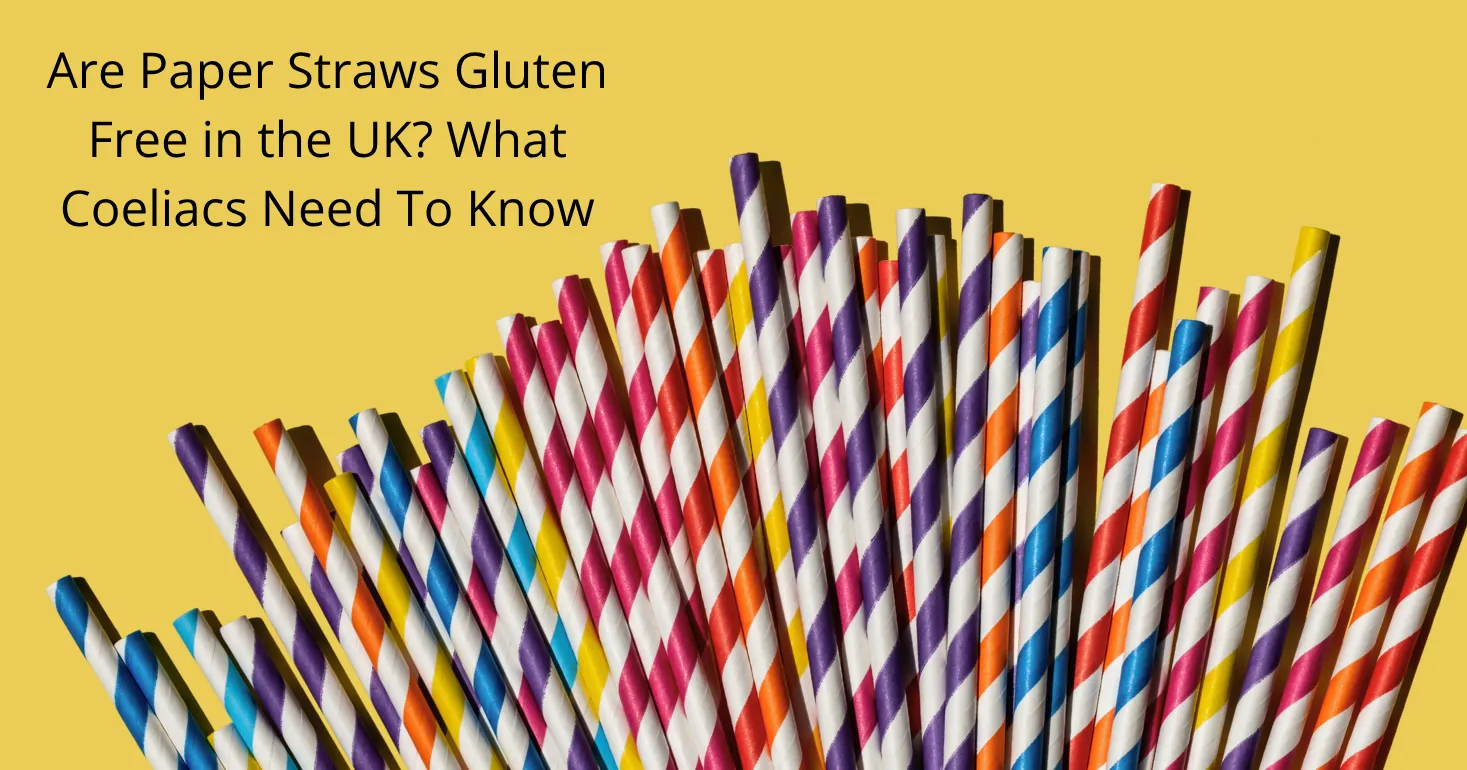
Paper straws have become a surprisingly controversial topic in the coeliac community over recent years, with social media posts often claiming they contain gluten or wheat-based glues.
Unfortunately, there is a lot of conflicting information online, and many different products are often grouped together under the term “paper straws”, despite not all being made from the same materials. Misinformation around gluten free living can spread quickly online, something I’ve also covered in my blog on gluten free myths and misconceptions.
Some products may use plant fibres derived from wheat straw, while others are simply made from standard paper sourced from wood pulp. Manufacturing methods and adhesives can also vary between suppliers.
As a result, many people with coeliac disease have been left unsure whether paper straws are something they need to avoid or not.
Here’s a look at the current guidance and what we currently know about paper straws and gluten.
Part of the confusion comes from the fact that people are often talking about completely different products online, including:
- Standard paper straws
- Plant fibre straws
- Wheat straw fibre products
- Pasta straws
But the types aren't the only confusion, the fact they can differ country to country also adds fuel to the flame.
Whether it's paper or another straw though the same base issue stands, not all products are manufactured in the same way and may not use the same materials or adhesives.
In 2025, Coeliac UK responded to a question on social media about gluten in straws explaining that:
There are many different fibrous plants that can be used to manufacture paper products, most notably wheat, rice, hemp, flax, and sugar cane. The gluten content of such wheat (straw) derived straws will be negligible but as with food products you would need to consider the specific product. Pasta straws may be gluten containing, therefore we would recommend that you ask about the gluten status of straws, and if in doubt don’t use them.Tree based paper itself would not contain gluten. We have recently followed up on an enquiry regarding a retailer paper straws, it has been confirmed that gluten is not in the glue or used in the factory at all. However, even if a straw, or paper plate or paper cup contained gluten, it would be very unlikely that you would swallow enough of it to cause a reaction.
If concerned, we would advise contacting the manufacturer directly to fully understand what the components in the product are made from and the risk of gluten ingestion
This distinction is important, as discussions about wheat straw fibres or plant-based materials are sometimes incorrectly shared online as meaning all paper straws contain harmful levels of gluten.
They also shared that they had recently (in 20225) followed up on an enquiry regarding a retailer’s paper straws and had been told that gluten was not used in either the glue or factory - but this will vary across manufacturers.
At the same time, Coeliac UK advised that people should consider the individual product where possible and contact manufacturers directly if concerned about the materials used.
This reflects the fact that manufacturing processes and ingredients can vary between suppliers and products.
McDonalds straws are often mentions in chats about straws, so to better understand the current situation, I contacted McDonald’s UK directly regarding the paper straws used in their UK restaurants as US stores differ and this often gets mixed together online.
They responded:
Thanks for reaching out. Regarding your question about the paper straws used in our UK branches, we cannot confirm if they contain gluten due to the type of glue used in their manufacture. We appreciate your understanding and will continue to adapt as the industry progresses.
This does not necessarily mean the straws contain harmful levels of gluten. Instead, it highlights that some manufacturers may not be able to fully guarantee the gluten status of every material used during production, such as adhesives.
This also reflects the cautious approach many companies take when discussing allergen information outside of food products themselves.
At the moment, there does not appear to be a simple universal yes or no answer to whether Coeliacs should avoid paper straws.
From Coeliac UK's social media replies, their guidance suggests that if gluten is present in some paper straws or wheat-straw-derived products, the amount would likely be negligible. However, because materials and manufacturing methods can vary, some companies may not be able to confirm products as fully gluten free.
For many people with coeliac disease, paper straws may be considered low risk based on currently available information. Others may prefer to avoid them entirely for peace of mind. There is no flat out yes or no as to whether they are safe
If you would prefer to avoid paper straws altogether, there are plenty of reusable alternatives available that can easily be carried when eating out or travelling.
Popular options include:
- Silicone straws
- Metal straws
- Reusable plastic straws
- Foldable travel straws with carry cases
Many people choose to carry their own reusable straw for convenience and added peace of mind.
As with many aspects of living with coeliac disease, individuals should make the choice that feels right for them based on the information available and their own comfort level.
If you are unsure about a specific product, contacting the manufacturer directly is always the best way to obtain the most up-to-date information.