Being diagnosed with coeliac disease can feel completely overwhelming. Suddenly you're checking every food label, questioning every meal out and wondering if life will ever feel "normal" again.
I was diagnosed over 12 years ago and, while gluten free living has become second nature now, there are so many things I wish someone had told me in those early days. Some lessons came quickly, others took years to learn, but every one of them has made living with coeliac disease a little easier.
Whether you've just been diagnosed or you're supporting someone who has, here are ten things I wish I'd known from day one.
Recovering from coeliac disease doesn't happen overnight. When I was diagnosed, nobody could work out what was causing my symptoms because I didn't have the "classic" diarrhoea and stomach ache. Instead, I had a debilitating pain in my right-hand side that nobody could explain.
It was a gastroenterology consultant who noticed my coeliac blood test results were borderline and suggested further investigation before recommending a gluten free diet. Even then, I didn't feel better overnight.
Slowly, things improved. For some people, it can take months for the gut to heal after starting a strict gluten free diet, so don't be discouraged if you don't feel amazing after a week or two.
I remember staring at ingredient lists in the supermarket and realising I had absolutely no idea what I was looking for. I didn't know the difference between gluten and dairy, or that mustard is a separate allergen altogether.
Reading labels is a huge learning curve when you've never had to do it before. Thankfully, food labelling has improved massively over the years and gluten-containing cereals must be clearly highlighted under UK law, making shopping much easier than it once was.
Now? A quick glance is usually all it takes.
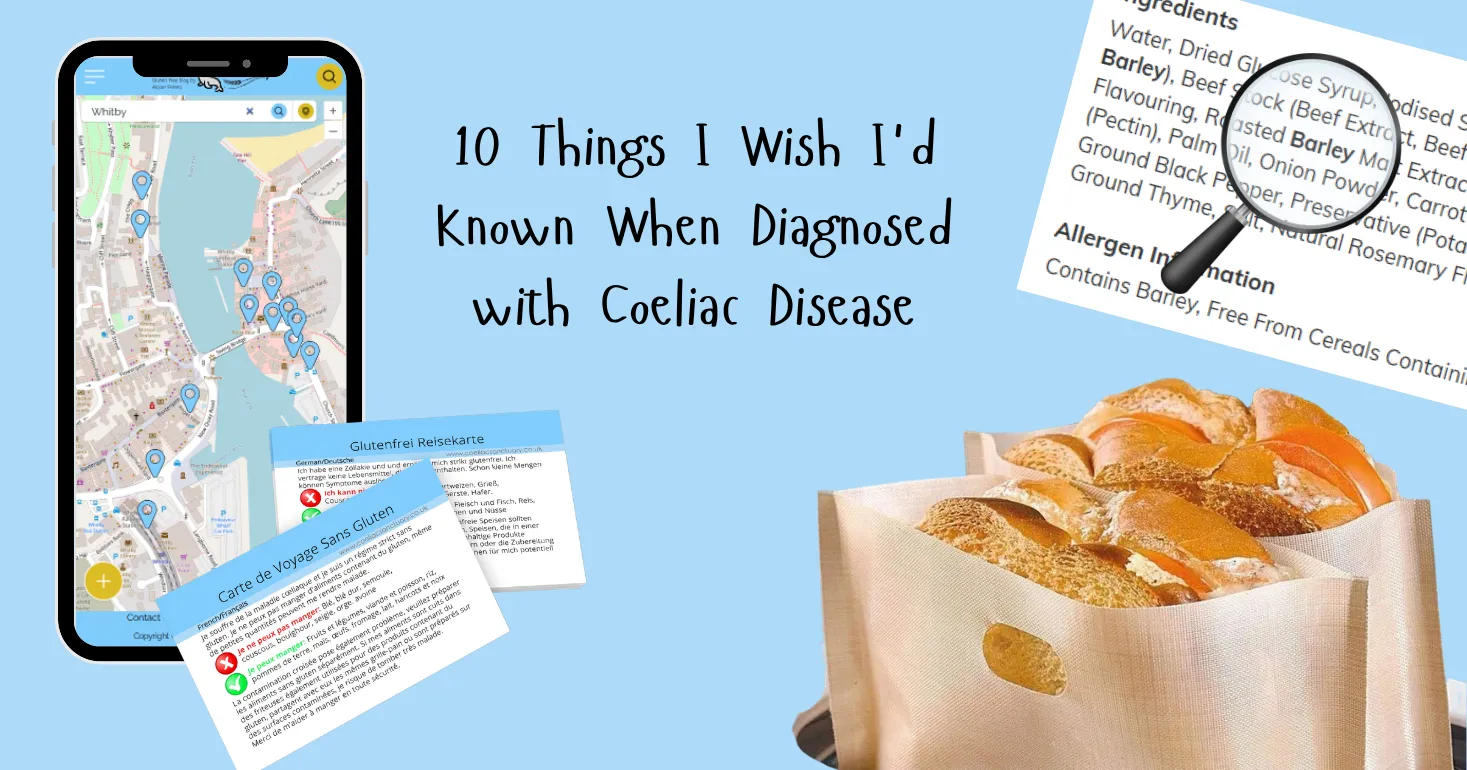
Separate toaster? Toaster bags? Yes, I've done both.
It's one of those things you never imagine until you're living with coeliac disease. Holiday apartments often have shared toasters that have seen years of gluten-filled bread, so throwing a toaster bag into your suitcase has become as normal as packing my toothbrush.
It wasn't until I lived with coeliac disease that I truly understood how easily gluten contamination happens. Shared tongs, chopping boards, butter dishes or cake slices might seem harmless, but it only takes a tiny amount of gluten to trigger symptoms and damage the gut.
Moo Free recently shared a brilliant video using glitter to demonstrate how easily allergens spread. It's such a simple idea but really shows how quickly tiny traces can end up everywhere.
Back in 2014, I trusted very few restaurants. One of my favourites was The Elephant (Shavington just outside Crewe, Cheshire and no longer does gluten free) because the owner at the time also had coeliac disease, so I knew I was in safe hands.
Everywhere else felt daunting.
I started keeping a list of restaurants recommended by other people with coeliac disease. That list eventually grew into the Where to Eat guide, which now helps thousands of people find gluten free options across the UK.
Even today, I research everywhere before I visit. I still ask questions, even at restaurants that know me by name. If someone says, "I think that's gluten free," that's my cue to ask a lot more questions. Or walk out.
That confidence doesn't come immediately but it does come.
Over the years this is one that has also gotten easier. Airlines are still very hit and miss but the countries themselves, there are loads of places that cater well and are often better than the UK. Of course there are the ones that are still harder to navigate but with travel cards like mine to help explain coeliac, various resources to help find safe places to eat and a host of people to follow on social media, the world is your absolute oyster even if navigating the world gluten free.
We usually associate grief with losing someone, but sometimes we grieve the life we used to have.
It's completely normal to miss your favourite bakery, the flaky croissant, that warm crusty baguette or the Chinese pancakes you always ordered on a Friday night.
Give yourself permission to feel disappointed.
Then remember this...
Gluten free food has improved enormously. Independent bakeries and manufacturers are producing incredible products that simply didn't exist when I was diagnosed. Take the time to look around and explore the gluten free world, from gluten free food fairs to independent online retailers, you will often find there are alternatives for whatever it is you are missing.
"A little bit won't hurt"
"Just eat the top bit"
Most people aren't trying to be difficult—they simply don't understand coeliac disease. Patiently explaining why "just a little bit" isn't safe becomes part of everyday life, and keep reinforcing it with them if it is someone you are close too.
Honestly I wouldn't find it as easy as I do now if it wasn't for the other bloggers I follow, the Facebook groups I check a lot, the Reddit pages that appear...they all help me find new places and products all the time!
I've discovered some of my favourite restaurants, products and travel tips thanks to the gluten free community.
Twelve years later, reading labels is second nature. I know what questions to ask in restaurants. I travel around and eat out regularly. I still have bad days, but coeliac disease no longer controls every decision I make.
If you've only recently been diagnosed, it probably feels overwhelming right now. You're learning an entirely new way of living, and nobody gets it right all the time.
I promise it won't always feel that way.
Living with coeliac disease isn't always easy, and there will be days when it feels frustrating. But there will also come a day when checking labels takes seconds, asking restaurant questions feels normal and packing gluten free snacks becomes second nature.
If this article helped, you might also find my Where to Eat guide, gluten free recipes and travel translation cards useful as you continue your gluten free journey. After more than 12 years of living with coeliac disease, my goal is simple, to make life a little easier for the next person starting theirs.